
How AI in Strava Garmin and Whoop is Changing the Coaching Landscape for Fitness Apps
Fitness apps have transformed how people train, track progress, and stay motivated. Among the leaders in this space; Strava, Garmin, and Whoop stand out for integrating artificial intelligence (AI) to enhance user experience. AI now plays a key role in analysing data, offering personalised insights, and even guiding workouts. But has AI replaced human coaches, or do real people still bring something unique to the table? This post explores how AI is used in these popular apps, compares them with emerging platforms like Athletica AI, and discusses the evolving role of coaching in fitness. And yes, I wrote this article myself after using all of the listed apps personally as an experiment!
AI in Strava: Community and Performance Insights
Strava started as a social platform for runners and cyclists, but it has steadily added AI features to improve training and motivation. The app collects GPS, heart rate, and power data to analyse workouts. AI algorithms identify patterns such as pace consistency, elevation changes, and segment performance.
Key AI features in Strava include:
Personalised Training Plans: Strava offers adaptive training plans that adjust based on user progress and goals. The AI monitors completed workouts and suggests changes to intensity or volume.
Performance Predictions: Using historical data, Strava predicts race times and potential improvements, helping athletes set realistic targets.
Segment Leaderboards and Challenges: AI ranks users on popular routes and suggests challenges tailored to fitness level.
Strava’s AI focuses on data-driven motivation and community engagement. It helps users understand their performance trends but does not replace coaching advice on technique or injury prevention.
According to the Amazon website (Amazon AI is utilised by Strava), 80% of Strava users find Athlete Intelligence insights 'helpful' or 'very helpful'.
Garmin’s AI: Advanced Metrics and Recovery Guidance
Garmin devices collect a wide range of biometric data, including Heart Rate Variability, (HRV) sleep quality, and stress levels. Their AI-powered platform processes this data to provide detailed insights into fitness and recovery.
Highlights of Garmin’s AI-driven features:
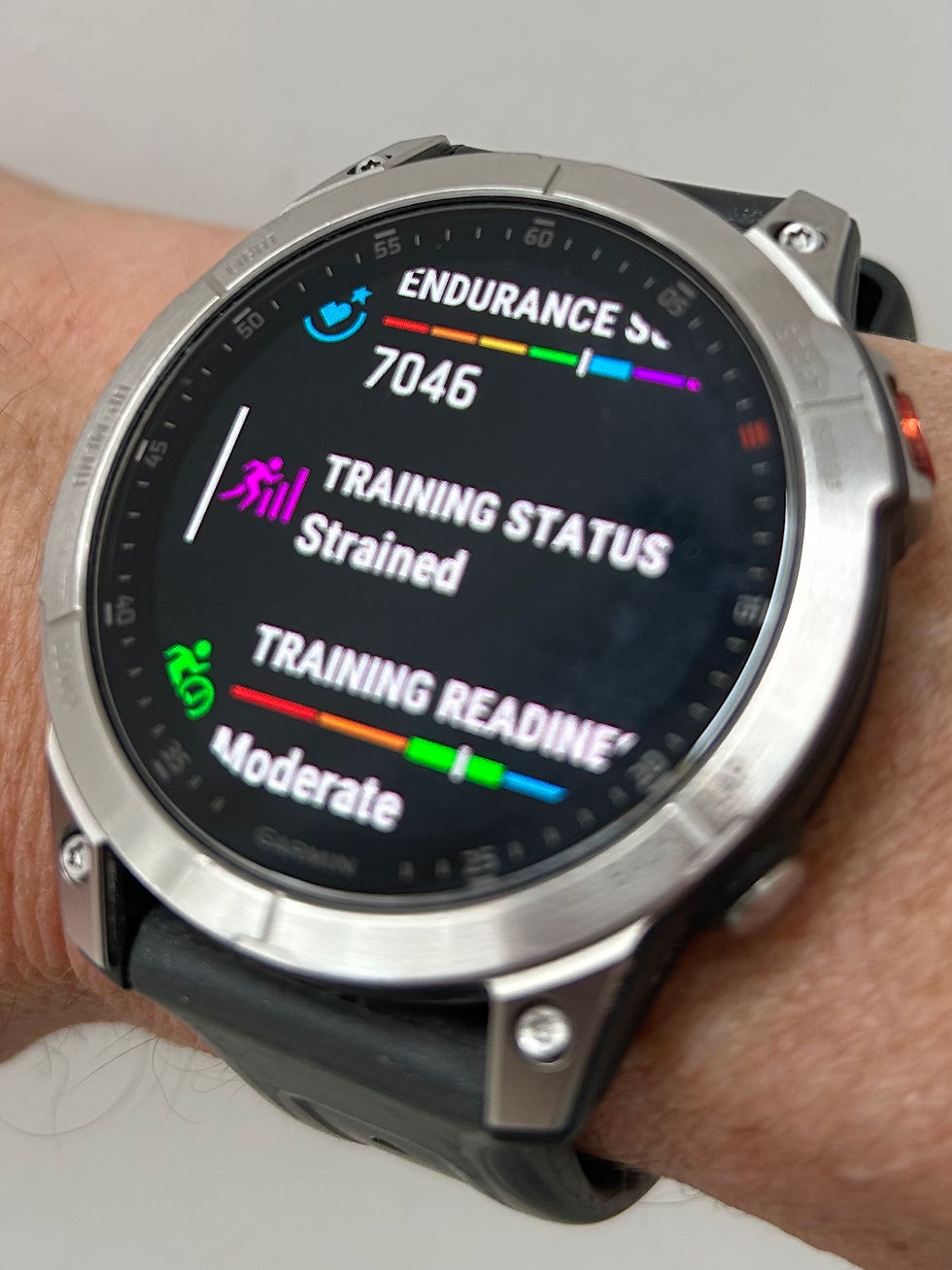
Training Load and Status: AI evaluates how hard the user has trained recently and whether they are improving, maintaining, or overreaching.
Recovery Time Recommendations: Based on workout intensity and physiological data, Garmin suggests how long to rest before the next hard session.
Body Battery Energy Monitoring: This feature estimates energy reserves throughout the day, helping users plan workouts when they are most ready.
VO2 Max and Performance Condition: AI tracks aerobic fitness and provides real-time feedback during runs or rides.
Garmin’s AI acts like a data analyst and recovery advisor. It offers personalised suggestions but does not provide the nuanced motivation or emotional support a human coach can offer.
Whoop’s AI: Focus on Recovery and Strain
Whoop is designed for athletes who want to optimise recovery and avoid burnout. Its AI analyses heart rate, HRV, sleep, and respiratory data to calculate daily strain and recovery scores.
Core AI functions in Whoop include:
Strain Coach: This feature recommends daily exertion levels based on recovery status, helping users avoid overtraining.
Sleep Coaching: AI suggests optimal sleep times and tracks sleep quality to improve recovery.
Respiratory Rate Monitoring: Changes in respiratory rate can indicate illness or fatigue, allowing early intervention.
Long-Term Trends: Whoop’s AI identifies patterns over weeks and months to guide training adjustments.
Whoop’s AI acts as a recovery-focused coach, emphasising balance between effort and rest. It provides clear, actionable advice but lacks the personalised encouragement and accountability a human coach provides.
Comparing AI Coaching with Human Coaches
AI in fitness apps excels at processing large amounts of data quickly and offering objective, personalised recommendations. It can track progress, predict performance, and suggest recovery strategies based on measurable metrics. This makes AI a valuable tool for self-coached athletes who want data-driven guidance.
However, human coaches bring strengths that AI cannot fully replicate:
Emotional Support and Motivation: Coaches inspire, encourage, and hold athletes accountable in ways AI cannot.
Technical Feedback: Coaches observe form, technique, and movement patterns to prevent injury and improve efficiency.
Adaptability: Humans can adjust plans based on life circumstances, mental health, and subtle cues that AI will likely miss.
Experience and Intuition: Coaches draw on years of experience to tailor advice beyond what data alone shows.
For many athletes (and thus coaches), the best approach combines AI tools with human coaching. AI handles data analysis and routine adjustments, while coaches provide personalised mentorship and motivation.
Other Fitness Apps Using AI: Athletica AI and Beyond
So the above apps have been around for a long time. But recently, AI has allegedly been making huge advances - to the point where an AI fitness app can provide 100% coaching to an athlete or client! So I thought I'd trial run perhaps the best revered full AI coaching app... Athletica AI. Athletica AI is an emerging app (approx 12 months as of May 2026) that uses artificial intelligence to create fully personalised training plans for runners, cyclists and triathletes. It collects data from wearables and user input to build adaptive workouts that evolve with progress.
Features of Athletica AI include:
Dynamic Plan Adjustments: The AI modifies workouts based on recent performance and fatigue levels.
Goal-Oriented Training: Plans focus on specific race distances and target times.
Injury Risk Assessment: AI flags potential overtraining or injury risks based on workload patterns.
Athletica AI represents the next wave of fitness apps that blend AI-driven coaching with user-friendly interfaces. It aims to provide a more comprehensive coaching experience without the cost of a personal coach.
To begin with, you enter all of your personal details, goals, time available to train etc. The app then produces a plan (4 week plan in trial version) that includes various endurance tests that can help inform the AI of your current status.
The problem I found was that the app didn't account for what I was already doing enough. And it didn't 'learn' quickly enough the type of training that I wanted to do. All in, the app was very data focused and again, did not have the nuanced approach to coaching that a human can offer.
What This Means for Fitness Enthusiasts
AI-powered fitness apps offer several benefits:
Accessibility: Personalised coaching is available to anyone with a smartphone and wearable device.
Data-Driven Decisions: Users can make informed choices about training intensity, recovery, and goals.
Cost-Effective: AI coaching is often cheaper than hiring a personal trainer.
At the same time, athletes should recognize the limits of AI. It cannot replace the human connection, motivation, and expertise that come from working with a coach. For serious athletes or those with specific needs, combining AI tools with human coaching may yield the best results.
Will AI Coaching Take Over Human Coaching?
So this is the big question for fitness professionals... And in my opinion, the answer is a reassuring and resounding 'NO - AI WILL NOT TAKE OVER HUMAN COACHING'. AI is great with data. AI is great with information that you give it. But none of the above apps (at least for a while) can obtain information from you that is detailed enough, or quick enough to make appropriate adaptations to programmes. Nor is AI able to respond to the other human needs that a human coach can do. Real motivation, real emotional support and real empathy, combined with real adaptability, mean that human coaches are in no danger of losing their jobs any time soon!
Do you agree? I'd be interested to hear your thoughts on this!
All the best,
Paul

Comments